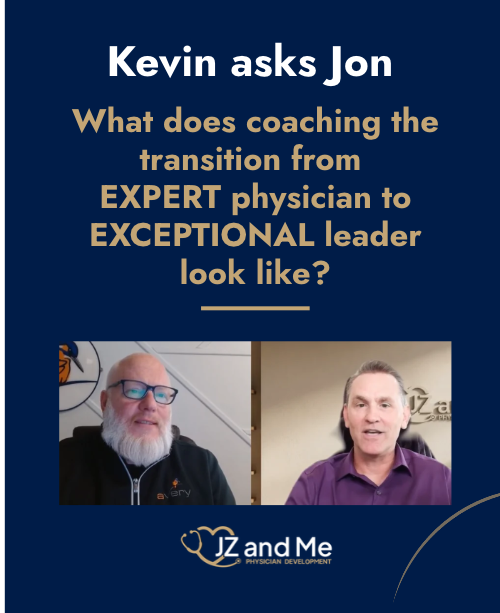
I discuss this in a recent Leadership That Stays vodcast conversation with Kevin Kirkpatrick from the Avery Professional Group.
Congratulations! 🎈 You're the New CMO! Now What?
Your first 90 days matter more than you can imagine. And your leadership development should start before day one.
Congratulations! You've been selected as the new Chief Medical Officer. You've worked hard to get here. You've established yourself as a respected physician, demonstrated leadership ability, and convinced an organization that you're the right person for the job.
Now comes a different challenge.
You're meeting people who may have very different expectations of you. You're building relationships with physicians, nurses, administrators, and other leaders. You're making decisions that won't always have a clear right answer. And you're learning to navigate an organization where your title doesn't automatically translate into influence.
The first few months can set the tone for years to come.
So, how do you get started? And what kind of support should a new physician leader have?
It Starts Before Day One
I actually think some of the most important work happens before you officially start.
You have an opportunity to think through how you want to approach the role, what you need to learn, and how you want others to experience your leadership. Those early interactions matter. People's first impressions of you can be difficult to change.
There's a reason Michael Watkins' book, The First 90 Days, is so well regarded. Starting a new leadership position requires a different approach than simply picking up where the previous person left off.
But having a plan for those first 90 days is only part of it. You also need to understand your own leadership capabilities.
You Can't Develop What You Haven't Diagnosed
I don't believe in assuming that every new CMO needs the same leadership development.
Some physicians are excellent communicators but struggle with accountability. Others are decisive but need to slow down and listen. Some are great at building relationships but have difficulty navigating conflict or influencing people who don't report to them.
You need to know where the gaps are before deciding what to work on.
That's why I believe a good starting point includes conversations about the new role, the challenges ahead, and a validated 360-degree leadership assessment.
I use the Leadership Circle Profile to get a better understanding of a leader's productive competencies and reactive tendencies.
From there, we can identify what needs attention, what needs strengthening, and where the greatest opportunities for development exist.
And that brings me to three different aspects of leadership development that I think are important.
The Firefighter, the Foundation Builder, and the Sculptor
I describe these as three roles that effective leadership development needs to address.
The Firefighter 🔥
Sometimes something needs attention right now.
Maybe you're dealing with a difficult physician interaction, an HR situation, an urgent decision, or an important presentation. You don't necessarily have weeks to work through it. You need to figure out what to do, how to approach it, and what to say.
That's the Firefighter. Addressing the immediate leadership challenges that come with the job.
The Foundation Builder 🏗️
This is the ongoing work of developing the core leadership competencies.
Based on the findings from the Leadership Circle Profile, we work on the areas that will make the biggest difference. That might mean improving communication, building trust, becoming more effective at gaining consensus, developing others, or learning to influence without relying on authority.
This takes time. It requires practice, feedback, and a willingness to look at how your own behaviors affect the people around you.
The Sculptor 🪨
Then there's the Sculptor.
This is about taking someone who is already a capable leader and helping them become exceptional.
It's refining the way they communicate, influence, develop others, and approach increasingly complex leadership situations. Sometimes it's not about fixing a problem. It's about getting even better at something you're already good at.
All three matter. And they don't necessarily happen one at a time.
A new CMO might be putting out a fire on Monday, working on foundational leadership competencies on Wednesday, and refining their approach to an important organizational issue on Friday.
That's what makes leadership development interesting. And why I don't think it works particularly well as a one-size-fits-all program.
Don't Leave Leadership Development to Chance
Physicians spend years developing their clinical expertise. We have structured training, examinations, feedback, and a fairly clear understanding of what we need to learn next.
Leadership development often doesn't have that same structure.
We promote physicians into important leadership positions and expect them to figure things out along the way. Some do remarkably well. Others struggle, sometimes with consequences for themselves, their teams, and the organization.
I think we can do better.
The transition from expert physician to exceptional leader takes more than a new title and a willingness to learn. It takes an honest assessment of where you are, a plan for where you need to go, and the right support along the way.
Your first 90 days are important. Don't wait until day 91 to start developing as a leader.
You can't develop what you haven't diagnosed.
Here's our 4-minute conversation on this topic.
Learn more to see if we would be great partners in your leadership development.
Jon Zlabek (JZ), MD, MBA, FSVM, FACP, is a physician executive and physician leadership coach with more than 25 years of clinical experience and a diverse leadership background, including roles as Chief Medical Officer, Medical Vice President, Board of Trustees member, and Chief of Staff. Through JZ and Me Physician Development, I help physicians build confidence, strengthen connection, and become exceptional leaders through diagnostic-driven physician leadership coaching. Learn more about my approach to physician leadership coaching.